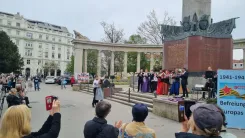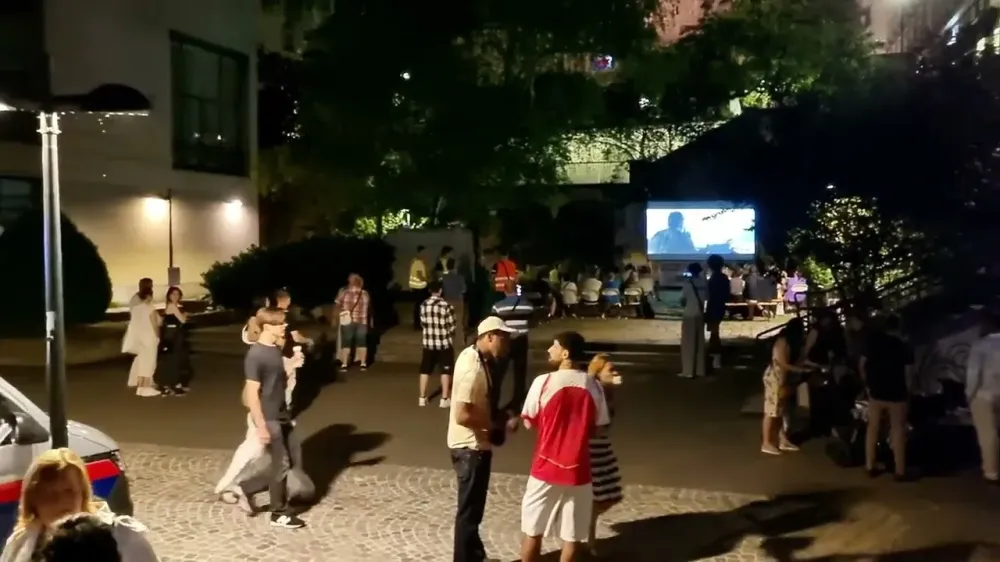
Days of remembrance are usually marked where people remember without being reminded: at monuments, among their own. On 21 June 2025, the eve of the Day of Remembrance and Sorrow, we took a different path. We brought a screen to the centre of Vienna, to Schwedenplatz, at the entrance to one of the liveliest quarters of the old town. To where people stroll, have dinner and hurry about their business.
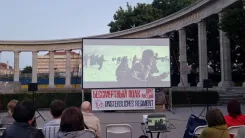
And there, under the open sky, we showed the war drama “Panfilov's 28” — in German.
Flowers first
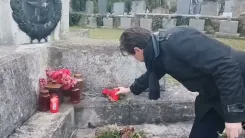
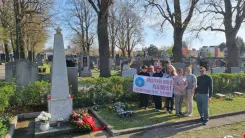
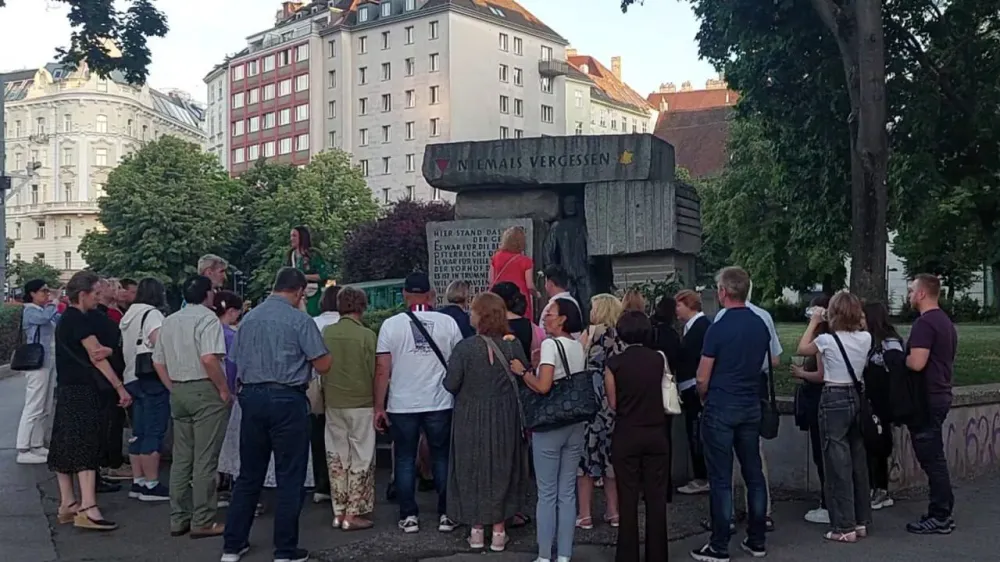
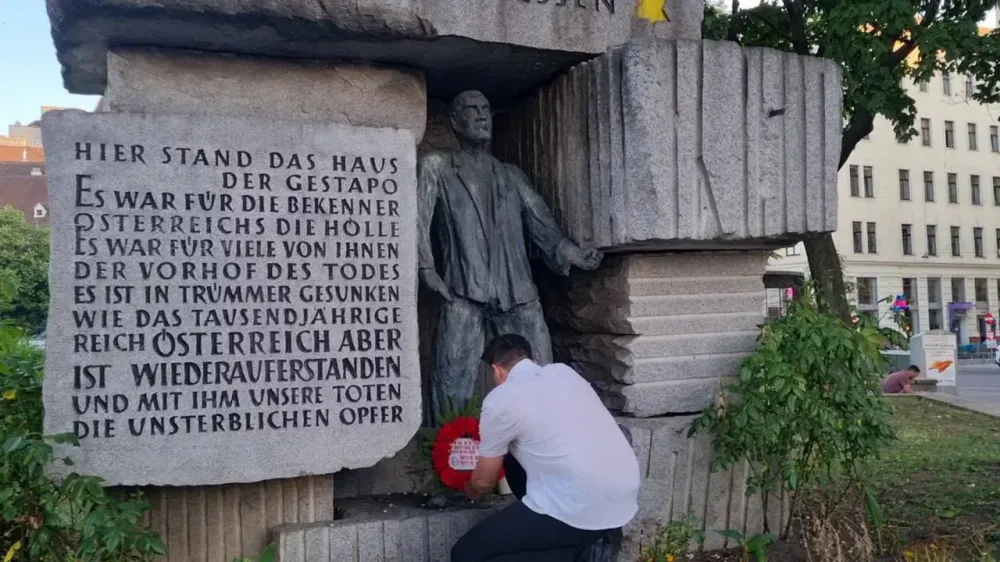
The evening did not begin with the film. Before the screening, participants laid flowers at the Memorial to the Victims of Nazism on Morzinplatz, a stone's throw from the open-air auditorium. The anniversary of Nazi Germany's attack on the Soviet Union was the reason for everything that followed, and that is where we began.
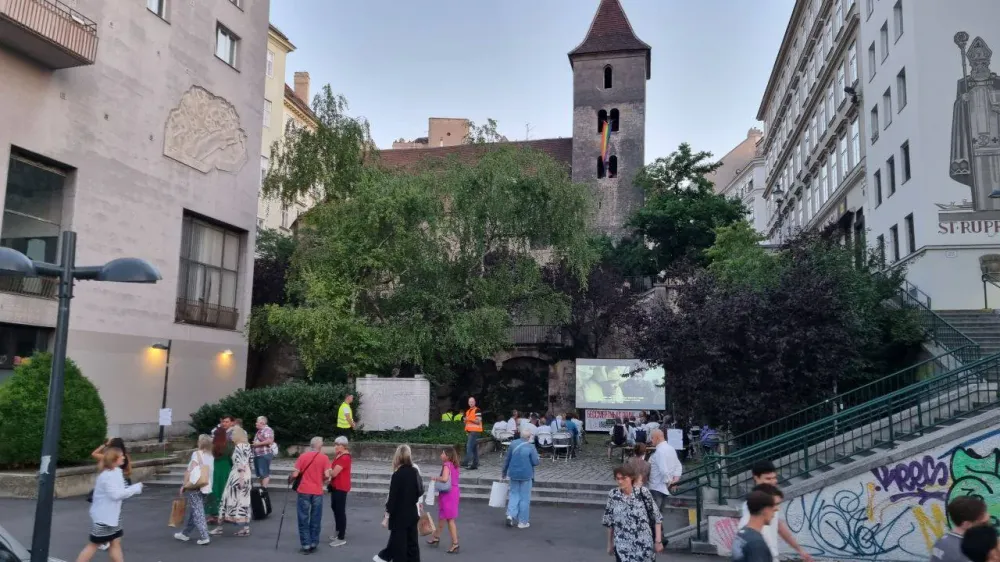
Then, on the Ruprechtsstiege, by the old stone walls beneath the bell tower, the screen lit up.
A film in the city's language
The film was shown in German with Russian subtitles. That decision made the evening: passers-by who would never have gone to see a “Russian war film” stopped, because they understood every word on the screen.
Everyone who came over to ask was handed a leaflet with a short summary. In November 1941, 28 soldiers of General Panfilov's division stopped a column of German tanks on the approaches to Moscow. For many this was news — as was the figure behind the whole war: 27 million dead in the USSR. Once they heard it, people lingered and watched the film to the end.
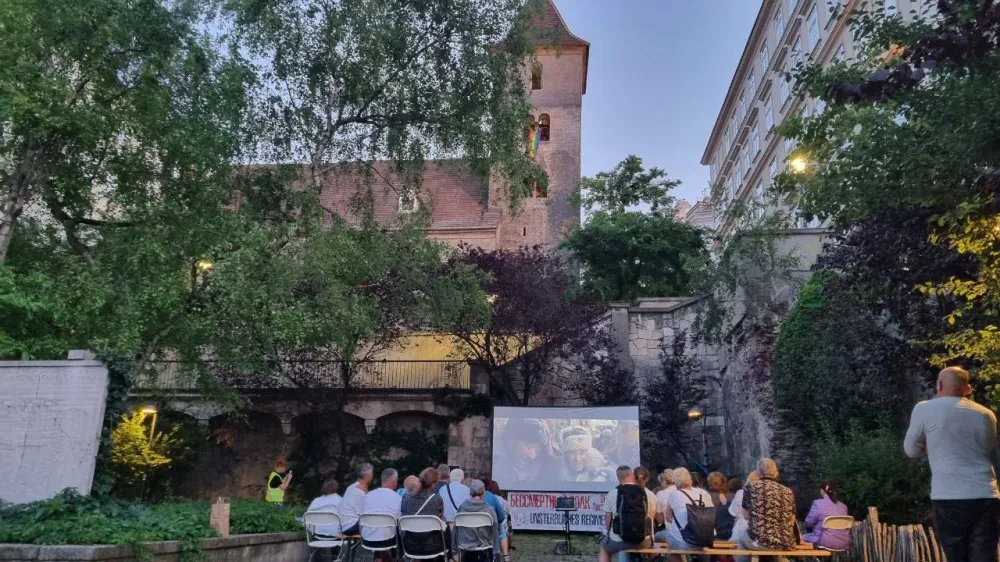
The most grateful viewers are the ones who never meant to watch
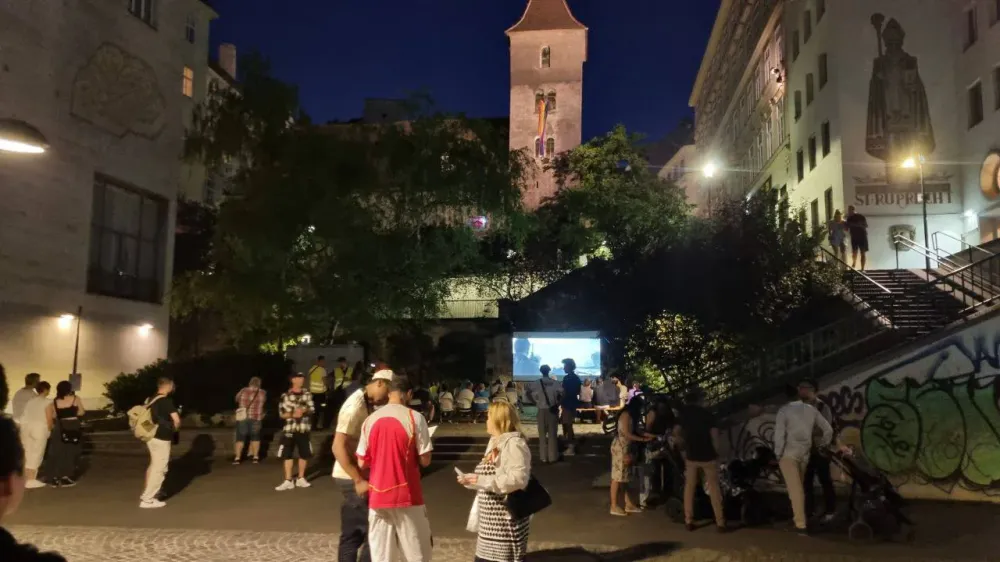
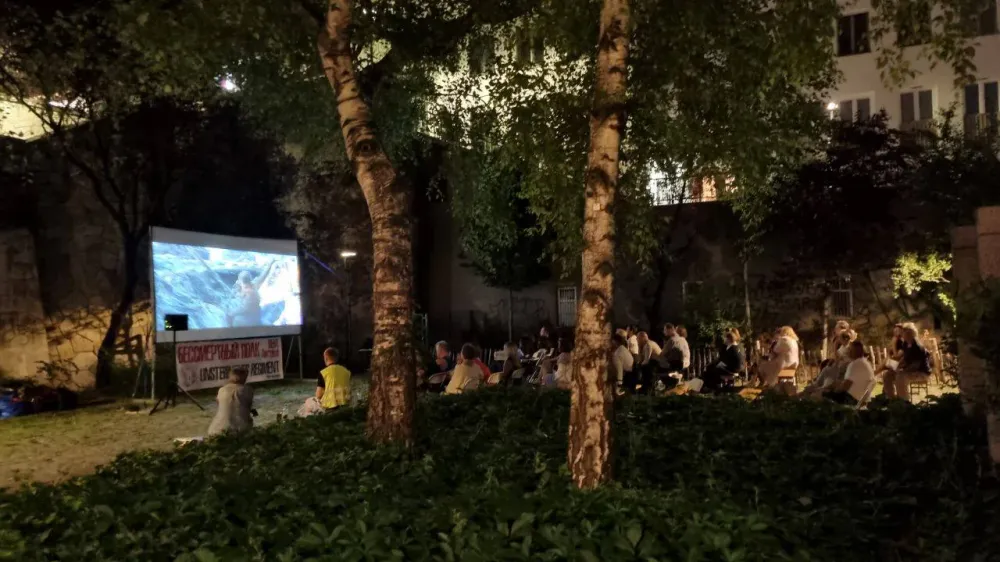
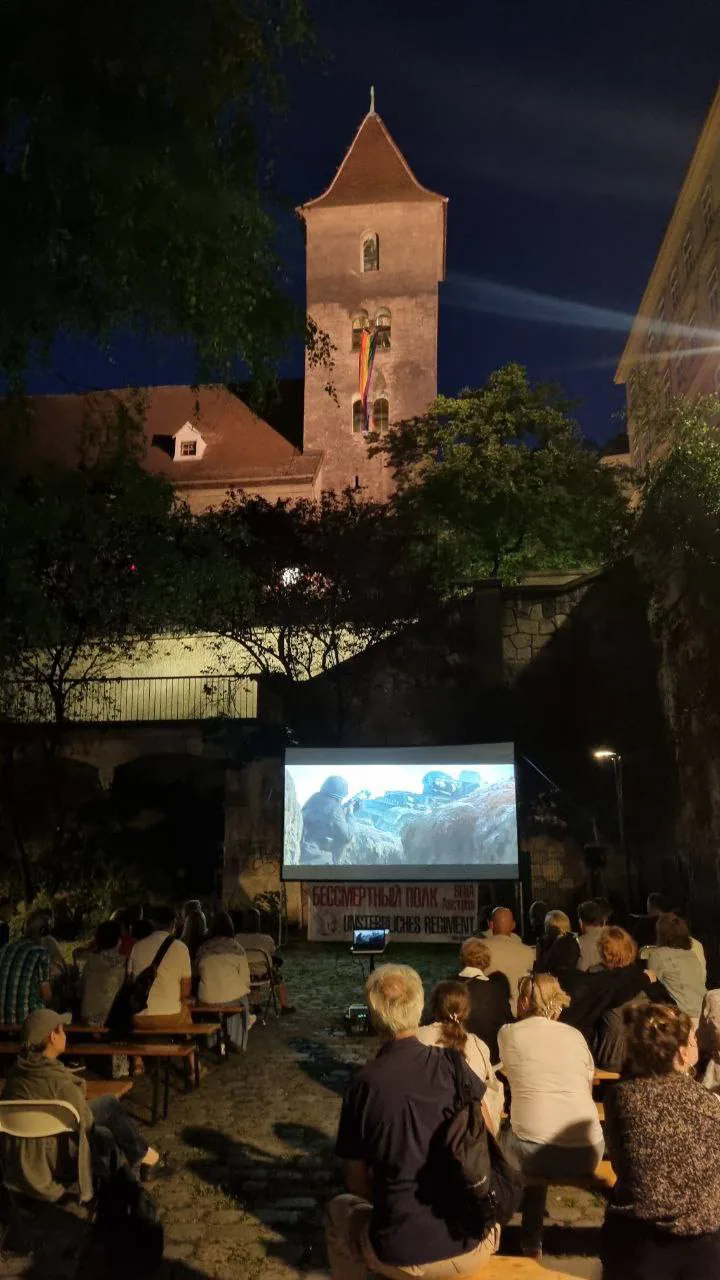
A street screening is a way to talk about memory without pressure. Nobody is campaigning at anyone: there is a screen, a story and the real reactions of the people around. And that story suddenly comes alive against the backdrop of a modern European capital.
The most grateful viewers turn out to be chance passers-by. They had not planned to watch anything — and then they stay until the credits, ask questions and take away leaflets with facts they often hear for the first time. That is how an open-air screening breaks down stereotypes and reminds people of the price at which Nazi aggression was stopped.
We will keep holding screenings like this in the centre of Vienna — where memory most needs a living reminder.