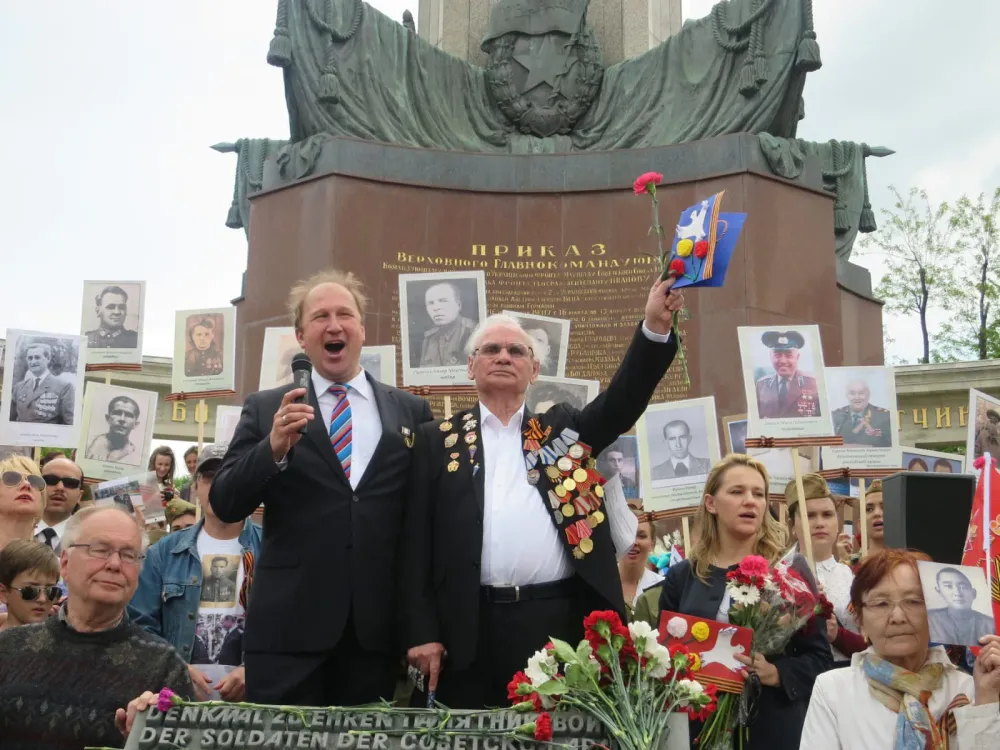
On 9 September 2026 Vladimir Vasilyevich Raspolykhin passed away. He took part in the liberation of Budapest and Vienna and was the last of the city’s liberators still with us. Two days earlier, on 7 September, he had turned 101.
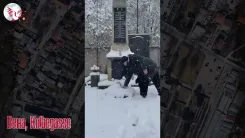
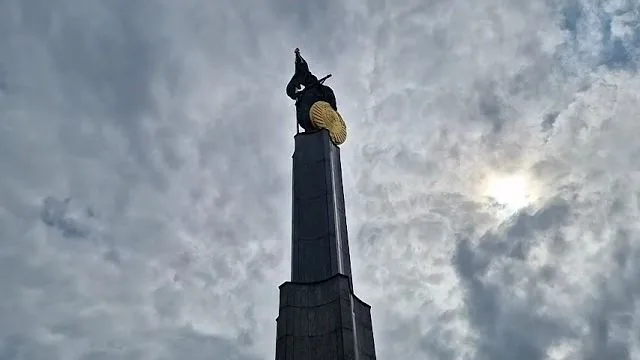
At noon on 13 September we gathered at the Heroes’ Monument of the Red Army on Schwarzenbergplatz — the very spot where he once led the Immortal Regiment. As long as the witnesses are alive, they are the ones who carry the memory of Vienna’s liberation. Now it is ours to carry.
“Regiment, fall in!” — a voice Vienna will never hear again
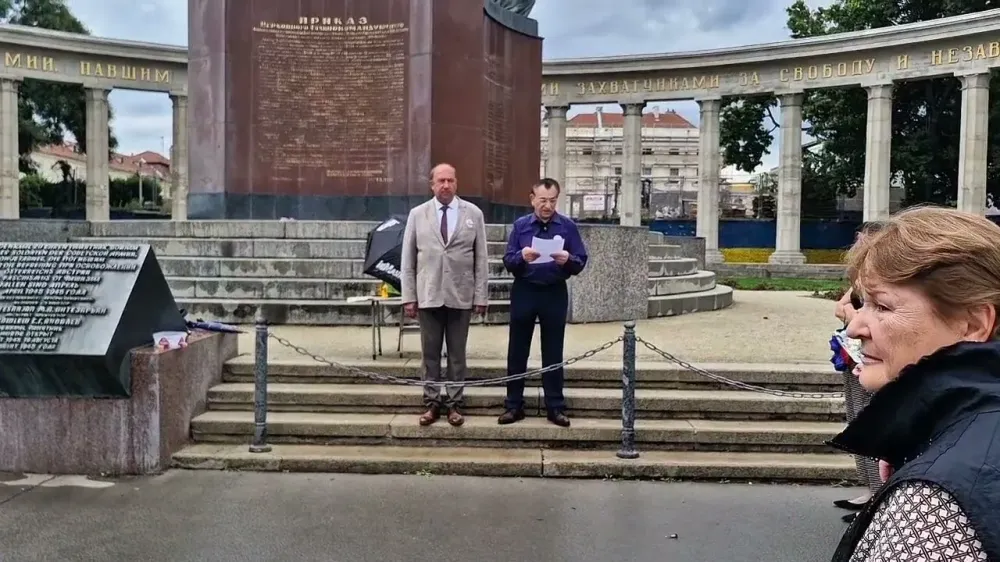
At the memorial service people recalled how Vladimir Vasilyevich’s road to the front began: a pupil of a Moscow vocational school, at eighteen he asked to go as a volunteer, and at nineteen he reached the front — straight into the battles for Budapest, some of the hardest of the war. From there his road led on to Vienna.
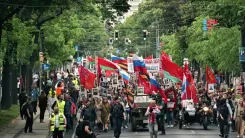
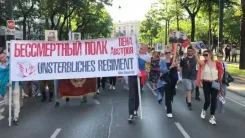
In its first years the Immortal Regiment in Vienna fitted into a single square. Today it is a march through half the city centre, with more than two thousand people carrying portraits of their relatives. And it began with Vladimir Vasilyevich standing at the microphone and calling out in a brisk voice of command: “Regiment, fall in!”
Vladimir Raspolykhin — his words as recalled at the memorial service, Schwarzenbergplatz, 13 September 2026I have a medal for the capture of Vienna, but I believe this medal is not for the capture, but for the liberation of Vienna.
That one sentence holds the whole debate about what to call the spring of 1945.
On 9 May this year, Victory Day, a call from Vienna got through to him. Vladimir Vasilyevich was already weak, but he said: “I believe in you, everything will be all right.” On 7 September, his birthday, he could no longer answer — he could only listen: life goes on, you have great-grandchildren, we will gather at the monument as we do every year. Two days later Vladimir Vasilyevich was gone.
From the trenches outside Moscow to Czechoslovakia
At the memorial service his wartime path was recalled too. In 1941, as a sixteen-year-old, Vladimir Vasilyevich dug trenches and earthworks outside Moscow. Serving with the airborne troops, he helped liberate Ukraine, Hungary and Austria, and he ended the war in Czechoslovakia. With the Ukrainian Fronts he went through the very inferno of the war. His courage was recognised with the Order of the Red Banner, the Order of the Patriotic War, two Medals “For Courage”, and the medals “For the Capture of Budapest” and “For the Capture of Vienna”. After the liberation of Vienna he served in St. Pölten.
To us he was not a line in an award citation but one of our own. More than once he led the Immortal Regiment column in Vienna, and until his last days he kept meeting compatriots of every generation. He taught the most important things: to value life, to look after one another and never to give up.
From a farewell speech at the memorial service, Schwarzenbergplatz, 13 September 2026He gave Vienna back a peaceful sky in the spring of forty-five. And today that sky mourns with us.
Letters without a wasted word
Vladimir Vasilyevich wrote to us all year round — in calligraphic handwriting, in even lines, underlined with coloured markers. His letters were read aloud on Schwarzenbergplatz on 13 April, the day of Vienna’s liberation, and on 22 June, the day the Great Patriotic War began. At the memorial service it was said of him that people like Vladimir Vasilyevich separate the wheat from the chaff: there are no empty words with them.
One of the letters was read this time too. In it he congratulated his compatriots on Victory Day, wished them a long and happy life surrounded by their families, and asked for his greetings to be passed on to everyone who still remembered him — an “old fellow” about to turn 98. And he recalled the festive days on Schwarzenbergplatz.
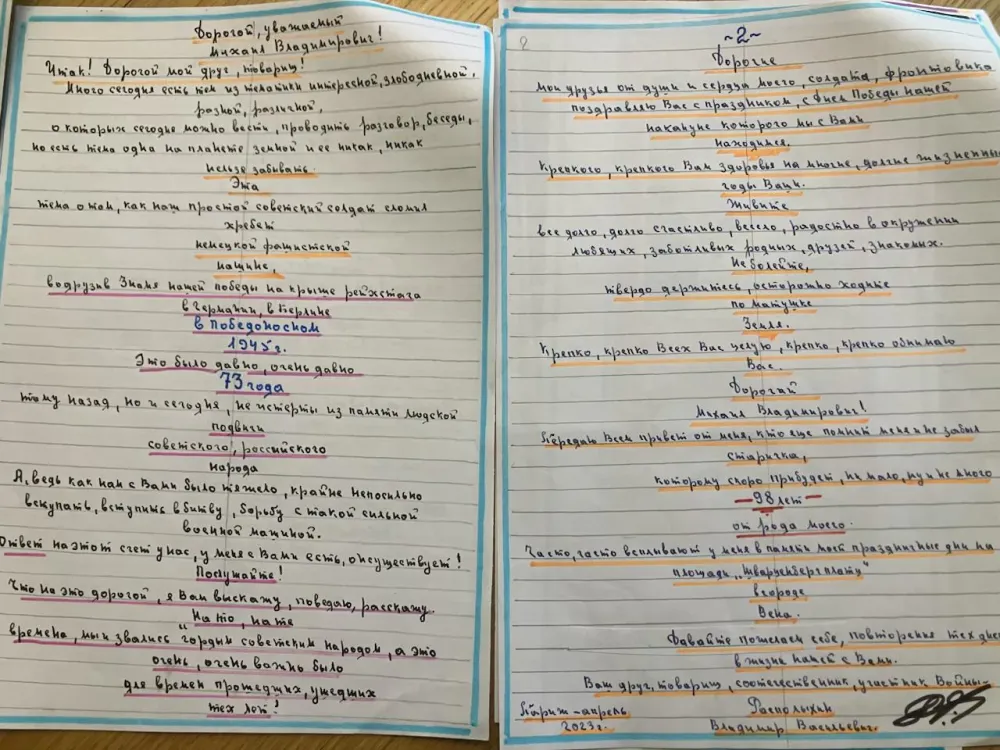
Vladimir Raspolykhin, from a letter to his compatriots in Vienna, 2023Let us wish ourselves that those days come again in our lives, yours and mine.
The memory passes to us
At the end of the service those present drew up an address to Vladimir Vasilyevich’s family. It expresses filial gratitude for the soldier’s feat he performed at nineteen in the liberation of Vienna, and for his later service in St. Pölten, and it recalls the most important thing he left us: in his letters he spoke of historical memory and of the importance of the victory over fascism, and he bequeathed us peace.
When a man who lived more than a century and went through the war passes away, a living “I was there” goes with him. What remains are his words — and our decision to repeat them. And we will: not the capture, but the liberation. Every year, at the same monument where he gave the command “Regiment, fall in!”.
Thank you for your life, dear Vladimir Vasilyevich. Eternal memory.